Welcoming Syrian Refugees

This booklet offers simple guidance on how local individuals, charities and groups in the UK can help welcome refugees into our communities. It explains some of the issues surrounding the process with materials and input from groups around the country.

Many d/Deaf people report bad experiences in cinemas such as poor customer service, or lack of subtitles on advertised screenings. Because of this, cinema trips can become stressful. d/Deaf audiences of colour may feel further reluctance to go to the cinema if they’ve experienced racial prejudice or don’t feel represented in their cinema. Running a club that supports an intersectional audience in this way creates a safe space for d/Deaf audiences of colour and can provide valuable cultural experiences and social opportunities.

Things to think about

  1. Brand the film club, if you can, to give it a strong sense of identity. The catchier the name the better, as it will help with name recognition and perhaps merchandising down the line.
  2. Seek endorsement from D/deaf organisations such as BDA (British Deaf Association) and bloggers e.g. Limping Chicken.
  3. Enhance your screenings with a forum/extra activity. Create a space for conversation, friendships to flourish, and discussion and debate.
  4. Offer food, even just a tea and biscuit break. If you can do something more exciting e.g. ethnic even better. Who doesn’t love free food?!
  5. Evaluate through surveys and/or your forum. Collate feedback and use it to improve events on the go. Think about being creative and using visual mechanisms like dot voting or smiley faces. Take feedback well and try not to be offended. Value their opinion and do your best to listen. Discrimination of D/deaf people is called ‘Audism’ and they are probably wary of hearing people, so be understanding if they need to vent.
  6. Develop leaders in the group and empower them with responsibility/autonomy, don’t mother or smother. Set up a small committee or steering group, if possible, which will give them even more status and hopefully pride in what they are doing and something that they can add to their CV. Encourage CODAs (Children of D/deaf Adults) and their family members to get involved as well.
  7. Consider people with hearing loss who do not sign (e.g. due to old age or through damage) and prefer oralism. Decide if you can also cater for them within the same group.
  8. Keep jobs simple and manageable though for the steering group. We’re looking to build confidence, not overwhelm people. Examples of roles can include: –
    – photographer/videographer (they can simply use their mobile phone and upload to – Facebook page/group)
    – someone in charge of registration/surveys
    – additional ushers to support staff
    – someone in charge of refreshments
    – talent booker
    – creator of signed YouTube promos
    – social media manager
  9. If you have the choice, find a venue with a great manager who cares. Consider also the demographic of your region, and if your location makes sense. Is it close to the community you’re trying to welcome?
  10. Use Whatsapp or a Facebook group to communicate (so you don’t have to worry about book an interpreter everytime you want to liaise with them) with steering group and it could be an easy way to set up film club membership as well. Having that could be a lot less work than maintaining and updating a website for the film club.
  11. Set frequency of meetings to discuss managing the film club. If turnout is low, then arrange to meet an hour or so before the event so they can go and enjoy themselves afterwards.
  12. Rotate the programme so that it reflects different issues e.g. nationality, race, gender, sexuality, disability etc. in order to represent the intersectionality of the group and make them feel acknowledged on an individual basis. Note that the group might sign in different languages and may not be familiar with BSL or English in general.
  13. Use Silent, Anime and World Cinema screenings as an opportunity to draw in the D/deaf and HoH community to your venue and integrate with your mainstream audience. Make sure the film is in the subtitled version, if relevant, as sometimes foreign films drop into English conversation.
  14. Learn the tastes of your steering group so that you are able to support their choices of film as there could be many that they have not heard of, let alone seen different genres. When showing them trailers, choose the CC (Closed Caption) option on YouTube, where possible.
  15. Consider Black History Month and/or Disability History Month as time for extra celebration or a special season, especially if you are not able to provide an all year round programme.

Off Y Grid

In 2016 Film Hub Wales approached venues across North Wales to develop a project designed to reduce isolation, build creative infrastructure and generate buzz around British independent and international films. Galeri, Pontio, Theatr Ardudwy and CELLB responded, bringing expertise and new cinema experiences to audiences in Gwynedd.

CREATE Film Festival

CREATE Film Festival was a project from multi-award winning organisation In Place of War, that looked at creativity in sites of conflict through the eyes of some of the world’s most daring and innovative filmmakers.

Come the Revolution

Come the Revolution is a collective of black curators, programmers and creatives that have been supported by Film Hub SWWM over the past 18 months to develop their practice and deliver a series of screening events in Bristol and Birmingham exploring and challenging black life, experience and cultural expression.

A Guide To Monitoring Your Audience Diversity

Audiences London developed these Guidelines for building a visitor profile in order to help organisations in their steps to develop a more diverse audience. These Guidelines are based on a research project carried out by Audiences London, which consulted a range of cultural organisations of all shapes and sizes. The advice here therefore acknowledges that … More

Do’s and Dont’s of Designing for Accessibility

The dos and don’ts of designing for accessibility are general guidelines, best design practices for making services accessible in government. Currently, there are six different posters in the series that cater to users from these areas: low vision, D/deaf and hard of hearing, dyslexia, motor disabilities, users on the autistic spectrum and users of screen readers.

Whether you are running a specific programme to engage with LGBTQ+ audiences or simply hoping to grow LGBTQ+ representation in your existing screenings, it’s really important to remember some key things to make sure you are sensitively and appropriately programming, promoting, and welcoming audiences in your cinema.

  1. Work with LGBTQ+ people themselves, whether it’s working with community or national organisations or with people within your own organisation.
  2. Employ a more diverse workforce at all levels. Welcome diverse groups in your job applications and your mission statements.
  3. If you can, get training delivered to staff about how to engage sensitively with audiences, and for a better understanding of the experience of LGBTQ+ people.
  4. Consider that people have multiple identities so communication needs to work for LGBTQ+ people across your whole programme, and don’t presume that you will only have an LGBTQ+ turnout for your targeted programming.
  5. Get LGBTQ+ people to audit your venue to give feedback about how the space feels, about signage, and about the customer service experience.
  6. Make sure you take feedback on board and actually use it, and share your reasoning across the organisation.
  7. Consider the tone of your signage – can you be gender neutral?
  8. Think about lesser told stories – not just the obvious films… Are you including lesbian and trans stories? Think about the filmmakers and if they have credibility.
  9. Get LGBTQ+ people to programme and give insights into marketing and audience development. (Best practice with any consultancy is to pay people!)
  10. Revise your communications with LGBTQ+ insights – what kind of language do you use? Are you welcoming? Is there subtle prejudice in the way you communicate that needs to be considered?
  11. You’ll need to do more community and social marketing. Engage with charities and relevant LGBTQ+ organisations.
  12. Use gay bars and clubs/venues and LGBTQ+ centres for your print advertising. If there are Pride events in your calendar, go along…
  13. Consider your survey. Do you have all the necessary fields for gender and sexuality? It’s a lot better to ask people to self-identify rather than to designate fields around gender.
  14. Could you be gathering deeper, qualitative, useful feedback – can you make yourself available to audiences for interviews/conversations afterwards?
  15. Think about opening up a dialogue and your audience will recognise the efforts you are making, and champion you to their networks. Even social media polls can be useful.
  16. Make it known that you’re trying to improve and willing to listen and learn.

*** COVID GUIDANCE UPDATE ***

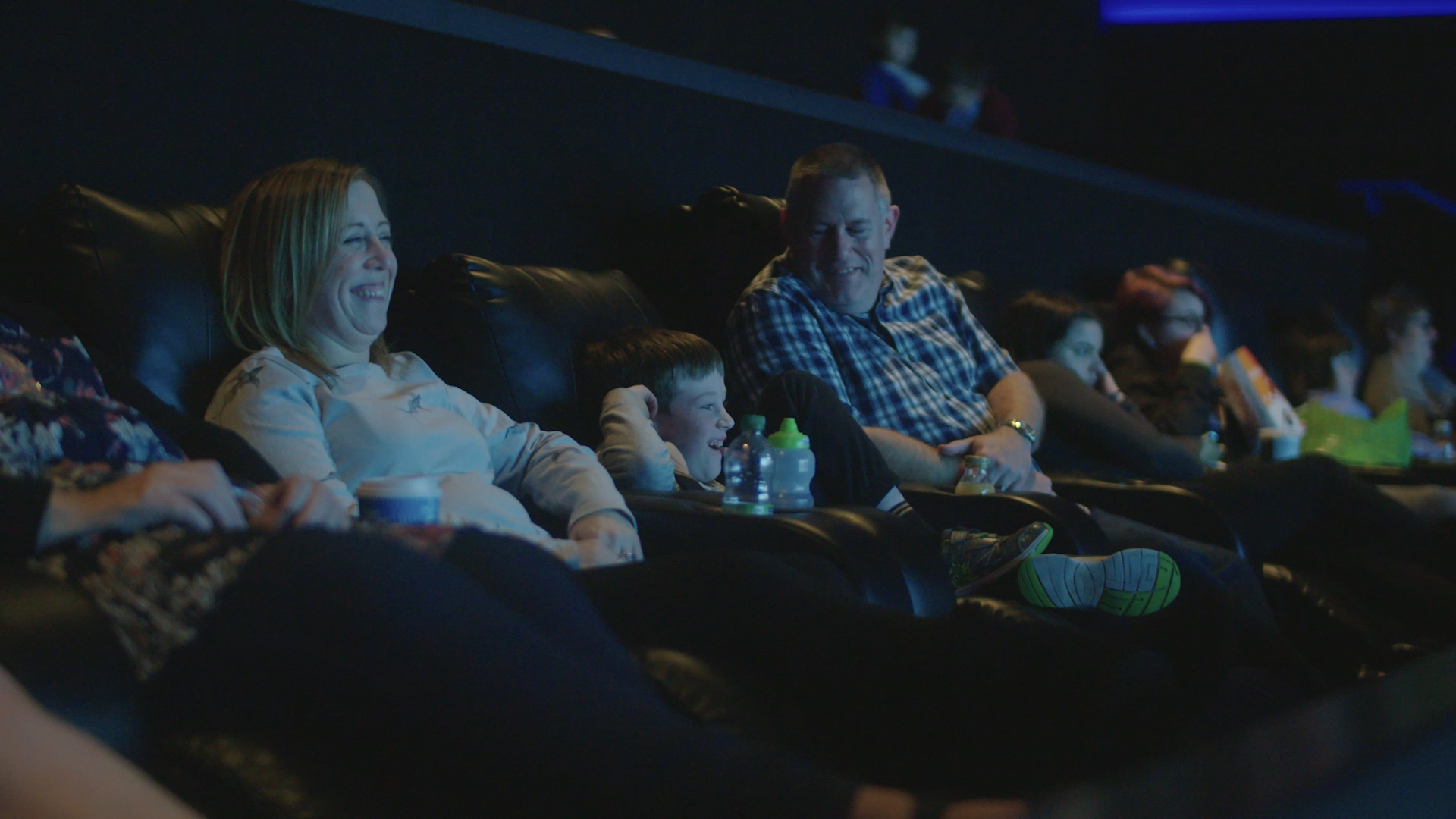
Research by Dimensions found that 90% of guests to autism friendly cinema screenings would feel safe going back to the cinema, with safety measures in place. Previous research has found that the autism friendly screenings are sometimes the only [quoted] “normal” activity people and families with autism can do together without fear of judgement. Autism friendly screenings are a safe space for people and families with autism, there isn’t fear of judgment and it’s an experience they can share with and talk about with friends and loved ones.

Going to autism friendly screenings was a routine for some guests, and routine can be very important for people with autism. Lockdown changed day-to-day life significantly so being able to go back to the cinema will offer some normalcy and respite.

Independent cinemas that are able to provide screenings are encouraged to support these audiences.

Dimensions created guidance and key messages to help exhibitors to adjust screenings to keep providing autism-friendly cinema to customers throughout covid.

***

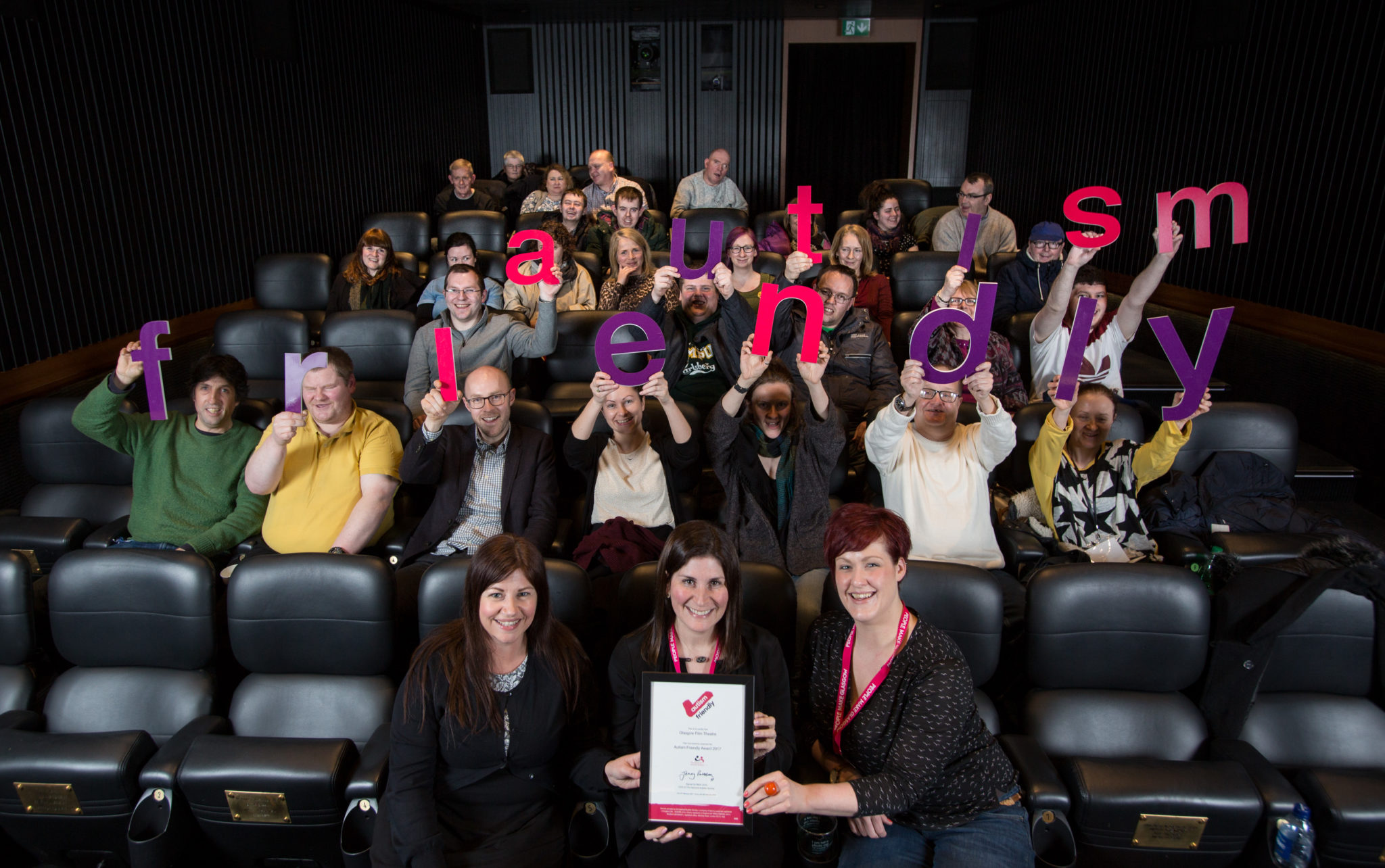
Back in 2011, Dimensions and the UK Cinema Association joined forces to help introduce regular autism-friendly screenings to the UK, developing the work begun by Picturehouse in collaboration with National Autistic Society (NAS) in 2009.

ODEON was one of the first UK cinema companies to roll out the delivery of autism-friendly screenings, in 40 sites across the country. Over 3,000 guests attended those screenings, since which time they have grown tremendously in terms of availability and popularity.

2016 marked the fifth anniversary of national autism-friendly screenings in the UK. In those first five years, there were 280,000 visits to 200 screenings across 300 sites operated by ODEON, Cineworld, Vue and Showcase Cinemas, with many more independent cinemas picking up the mantle and running regular programmes of their own.

With five national cinema chains, and a number of independent exhibitors, now partnering with Dimensions and committed to high quality, regular screenings, cinema is becoming increasingly accessible for guests with sensory sensitivity. Through this training, we aim to support more cinemas in the delivery of autism- friendly screenings.

The UK Cinema Association, supported by Dimensions and the BFI Film Audience Network, have produced this guide on how best to deliver and promote autism- friendly screenings at your cinemas. We hope you find it useful and it inspires you to consider putting on your own autism-friendly screenings.

Whilst this guide predominantly focuses on autism – and screenings are therefore referred to as autism-friendly screenings (AFS) – we know many cinemas use the terms ‘relaxed’ or ‘sensory friendly’. Whatever the name used, such screenings can benefit anyone who finds standard screenings overwhelming.

People with a broad range of cognitive conditions can look at what these screenings do differently to see if they might be of benefit to them.

Access the guide, along with further resources in the downloads section.

Autism-friendly screenings training video