5 ways to make your venue more accessible for D/deaf people
Experiencing films on the big screen is something that can be enjoyed by everyone, but accessibility can sometimes lag behind demand. How do we make sure the cinema is open to everyone?



Experiencing films on the big screen is something that can be enjoyed by everyone, but accessibility can sometimes lag behind demand. How do we make sure the cinema is open to everyone?
Whether you are running a specific programme to engage with LGBTQ+ audiences or simply hoping to grow LGBTQ+ representation in your existing screenings, it’s really important to remember some key things to make sure you are sensitively and appropriately programming, promoting, and welcoming audiences in your cinema.
Project overview A short film programme curated by Wotever DIY Film Festival presenting an exciting selection of performative work by functionally diverse filmmakers exploring the intersections of queerness and disability. All films are captioned for D/deaf and Hard of Hearing audiences and are audio described for visually impaired audiences. The programme has been screened 3 … More
Stonewall, as the leading organisation advocating for LGBT+ rights in the UK, says it is a reasonable estimate that there are between 5-7% people in the UK who are LGBT+.
Some further interesting statistics:
[1]Stonewall: The Gay British Crime Survey (2013) and LGBT in Britain – Hate Crime (2017)
[2]Stonewall: Gay in Britain (2013) and Engendered Penalities (2007)
[3]Stonewall: The School Report (2017) and The RaRE Research Report (2015)
[4]Stonewall: Stonewall’s International Work and ILGA World (2016).
[5]Crisis, 2005
[6]University of Central Lancashire, 2014
[7]King et al 2008
Stonewall works for acceptance without exception for lesbian, gay, bisexual and transgender people.
LGBT Foundation is a national charity delivering advice, support and information services to lesbian, gay, bisexual and trans (LGBT) communities.
See the downloads for a detailed list of organisations.

Powerful film by LGBTIQA+ people of colour. We demonstrate as a festival, as in turn the multiple successes of our opening film Moonlight did on a larger scale, that films focusing on experiences of LGBTIQA+ people of colour can captivate the attention of people from all backgrounds.
*** COVID GUIDANCE UPDATE ***
Research by Dimensions found that 90% of guests to autism friendly cinema screenings would feel safe going back to the cinema, with safety measures in place. Previous research has found that the autism friendly screenings are sometimes the only [quoted] “normal” activity people and families with autism can do together without fear of judgement. Autism friendly screenings are a safe space for people and families with autism, there isn’t fear of judgment and it’s an experience they can share with and talk about with friends and loved ones.
Going to autism friendly screenings was a routine for some guests, and routine can be very important for people with autism. Lockdown changed day-to-day life significantly so being able to go back to the cinema will offer some normalcy and respite.
Independent cinemas that are able to provide screenings are encouraged to support these audiences.
Dimensions created guidance and key messages to help exhibitors to adjust screenings to keep providing autism-friendly cinema to customers throughout covid.
***
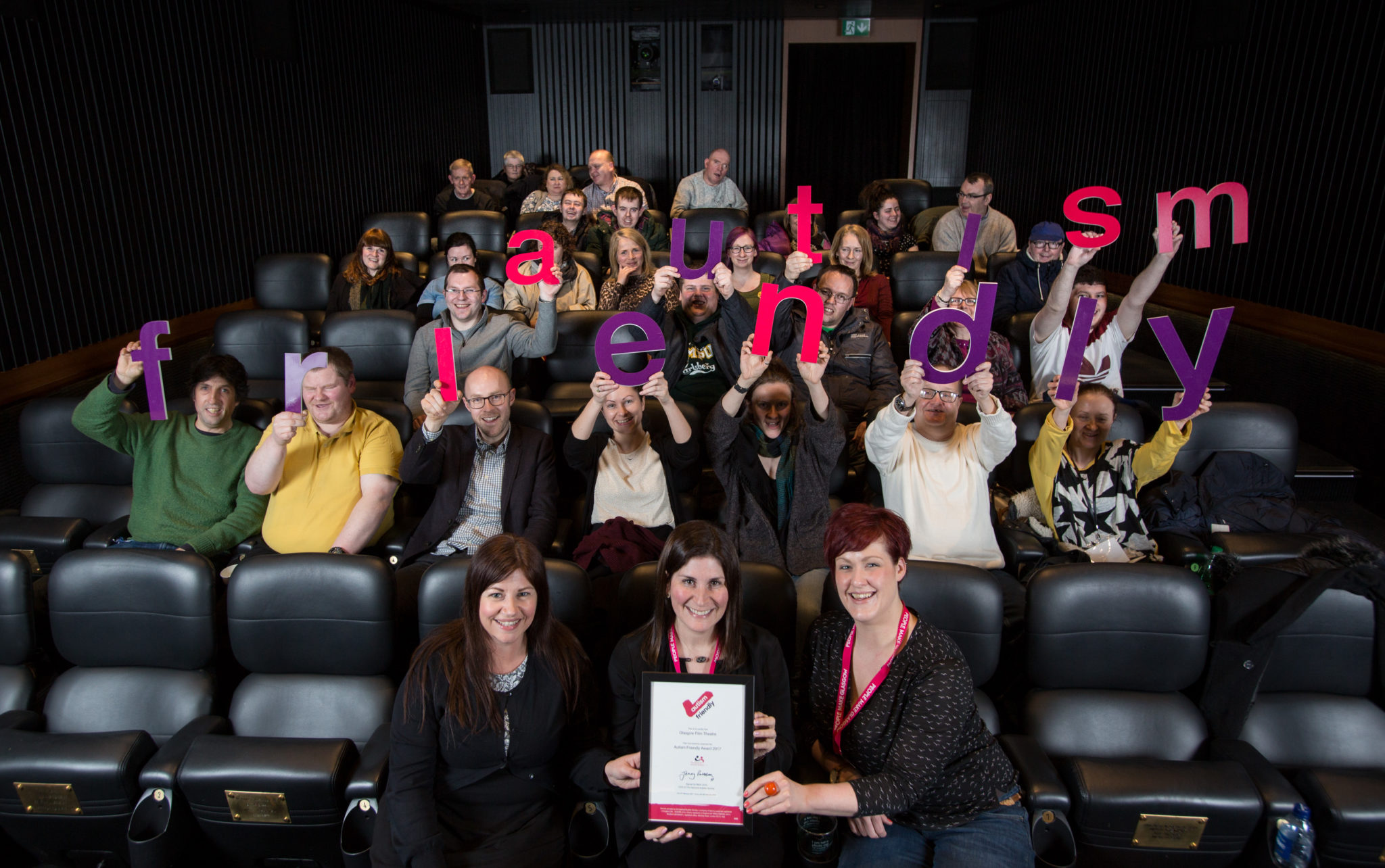
Back in 2011, Dimensions and the UK Cinema Association joined forces to help introduce regular autism-friendly screenings to the UK, developing the work begun by Picturehouse in collaboration with National Autistic Society (NAS) in 2009.
ODEON was one of the first UK cinema companies to roll out the delivery of autism-friendly screenings, in 40 sites across the country. Over 3,000 guests attended those screenings, since which time they have grown tremendously in terms of availability and popularity.
2016 marked the fifth anniversary of national autism-friendly screenings in the UK. In those first five years, there were 280,000 visits to 200 screenings across 300 sites operated by ODEON, Cineworld, Vue and Showcase Cinemas, with many more independent cinemas picking up the mantle and running regular programmes of their own.
With five national cinema chains, and a number of independent exhibitors, now partnering with Dimensions and committed to high quality, regular screenings, cinema is becoming increasingly accessible for guests with sensory sensitivity. Through this training, we aim to support more cinemas in the delivery of autism- friendly screenings.
The UK Cinema Association, supported by Dimensions and the BFI Film Audience Network, have produced this guide on how best to deliver and promote autism- friendly screenings at your cinemas. We hope you find it useful and it inspires you to consider putting on your own autism-friendly screenings.
Whilst this guide predominantly focuses on autism – and screenings are therefore referred to as autism-friendly screenings (AFS) – we know many cinemas use the terms ‘relaxed’ or ‘sensory friendly’. Whatever the name used, such screenings can benefit anyone who finds standard screenings overwhelming.
People with a broad range of cognitive conditions can look at what these screenings do differently to see if they might be of benefit to them.
Access the guide, along with further resources in the downloads section.
The project was created to develop inclusive cinema serving rural/isolated audiences on the Isle of Tiree, the most westerly of the Inner Hebrides. Tiree has a population of 650 and the nearest cinema is 4 hours away on a ferry. The project was initiated by Jen Skinner in December 2015 using an old projector in … More
Being inventive about funding sources is essential in cinema. From sponsorship, to film funding, to support from trusts and foundations, there are options available to most organisation types.
The BFI distributes National Lottery funding for national audience projects through two avenues. National-scale projects can apply directly to the Audience Project Fund, a rolling project fund. You can find out more at this link.
Cinemas running regional projects can apply for funding from their film hub. Each hub operates their funding calendar in a different way, although the aims of the funds are largely the same and refer to the priority areas under BFI 2022:
● Engaging audiences – maximising the number of audiences engaging with FAN activity and increasing the quality and cultural depth of their experience
● Broadening film choice – increasing access to a wide range of independent British and international film for audiences – especially those outside London
● Diversity – increasing the diversity of audiences engaging with FAN activity
● Young audiences – boosting participation of 16-30 year olds in FAN activity
● Screen heritage – facilitating greater access to archive content with a particular focus on national and regional collections
Find out about each hubs funding on their websites.
Film Hub Midlands
Film Hub North
Film Hub Scotland
Film Hub Northern Ireland
Film Hub Wales
Film Hub South West
Film Hub South East
Film Hub London
Film hubs respond to the needs and make up of their regions so funds may be formatted individually, and focus on different elements of the priorities at different times. You must register as an organisation to be a FAN member to receive funding, but registration is free.
Some regional film hubs also offer project funding to any FAN members across all the nations and regions through national programmes:
Major Programmes (large national seasons led by BFI and FAN)
Screen Heritage (national archive seasons)
New Releases (supporting independent film titles)
If you have access requirements that mean you need assistance when applying for BFI and film hub funds, you may be able to request financial support through the BFI Access Support scheme. Find out more information here.
BFI Audience Projects Fund
Creative Europe UK
Cinema for All
Screen Scotland
Creative Scotland
Northern Ireland Screen
Ffilm Cymru Wales
Film & Television Charity
There are also a range of funders who fund projects supporting diverse groups.
Reaching Communities from National Lottery
Big Lottery Fund
Heritage Lottery Fund
Esmee Fairbairn Foundation
The Baring Foundation
Paul Hamlyn Foundation
The Allen Lane Foundation
Arts Council
Comic Relief
Arts & Humanities Research Council
The Rayne Foundation
Creative Scotland
Wolfson Foundation
Garfield Weston
Foyle Foundation
Trusthouse Charitable Foundation
John Ellerman Foundation
The Tudor Trust
The Henry Smith Charity
The Dunhill Medical Trust
From in-kind support of food and drink for your event to large CSR (corporate social responsibility) funds from major commercial organisations, there is money to be found for cinemas that can align the work they’re doing to the priorities of companies.
In 2018 we asked our network members to tell us how inclusive they felt their cinemas were and what they’d like to do to increase access to their film programmes. 70% felt that more training could help.
The BFI Diversity Standard encourages exhibitors to offer inclusive cinema programmes – inclusion for those with additional needs, as well as for those who may feel culturally excluded.
Lots of us have fears and are aware of the barriers that stand in our way when we try to develop diverse audiences, but we don’t often get the time to consider our options, talk to peers and come up with solutions and ideas to improve what we offer.
FAN delivers training in Inclusive Cinema to our membership, through face-to-face workshops, resources such as this, 121 consultancy, and industry conferences like This Way Up. See us at major independent cinema events, such as Slate Days and Screening Days. The ICO, UKCA and other organisations that specialise in accessibility and diversity also have regular programmes of training to support exhibitors looking to grow their diverse audiences.
FAN’s regional film hubs – links on the funding page
Independent Cinema Office (ICO)
Cinema for All
Into Film
UK Cinema Association (UKCA)
Centre for Accessible Environments – accessibility
Arts Marketing Association – audience development incl. Diversity Academy
Audience Agency – audience development
The Other Box – bias, diversity and inclusion training
BRAP – diversity and inclusion training
A&IM – Access and Inclusivity Matters
Sunsurfer – equality, disability and mental health training
The Diversity Trust – equality, diversity and inclusion training
Shape Arts – disability equality training
DASH – accessible marketing and disability equality training
Equality and Diversity UK
ACAS – equality, mediation and management training
Zebra Uno – Deaf awareness and sign language training
RNID – Deaf awareness
Royal Deaf – Deaf awareness
Remark! – Deaf awareness
Deafinitely Theatre – Deaf awareness
BIFA – Equality, Diversity and Inclusion Training
Amiokaa – equality, diversity & inclusion training
Diverse Matters – equality, diversity and inclusion training
For filmmakers, BFI Network offers a full list of funders and training providers for filmmakers and production roles.
Independent cinemas, film clubs and societies, and multi-arts venues have produced some of the most exciting cinema events, engaging with audiences across the broadest spectrum of the UK public. From R&D projects, piloting screenings for children with multi-sensory needs, to symposiums on LGBTQ+ film, to festivals raising awareness about living well with dementia, to film clubs led by Black, Asian and minority ethnic d/Deaf audiences, much of the Film Audience Network’s membership – large and small – have been bringing valuable film experiences and a slice of normal life to all people, whatever their protected characteristics.
Here, we share some best practice case studies, in an aim to engage more cinemas to take up inclusive cinema projects, collaborating with partners and specialist organisations to build a cine-literate and appreciative film culture.
If you’d like to submit your own case study, please download this Inclusive screening case study template and submit it to toki[at]filmhubwales.org, so we can share your experiences, too.