Volunteers’ Week takes place in June every year, this week it runs from 3rd – 9th June. It’s a chance to say thank you for the contribution millions of volunteers make across the UK to support our communities.

The Week is open to anyone to take part – this can include carrying out an act of kindness, doing some volunteering or contributing to discussion. Find more information here.

The week is led in partnership by NCVOVolunteer ScotlandVolunteer Now (Northern Ireland) and Wales Council for Voluntary Action and supported by organisations across the UK.

Volunteers and Cinema

Hundreds of community cinemas across the UK are volunteer-run, with people bringing their love of cinema and the audience experience to life in their communities. There are also many other independent venues that simply would not be able to provide the special and personal experiences they do without the support of volunteers. This is a week to give extra thanks to these brilliant people.

6 Steps to Volunteer Management Success | Leep NGO

Refugee Week takes place every year across the world in the week around World Refugee Day on the 20 June. In the UK, Refugee Week is coordinated by Counterpoint Arts and is an umbrella festival with a nationwide programme of arts, cultural and educational events that celebrate the contribution, creativity and resilience of refugees, and encourages a better understanding between communities.

Refugee Week began in 1998 in response to hostility in the media and society towards refugees and asylum seekers. It is is now one of the leading initiatives working to counter this negative climate, defending the importance of sanctuary and the benefits it can bring to both refugees and host communities.

Anyone can take part in this open platform by holding relevant events or activities of all kinds.

Some of the aims of Refugee Week are to:

  • Celebrate the contributions of refugees and people seeking sanctuary.
  • Challenge negative stereotypes and create a space where refugees can be seen and heard beyond their experience of displacement.
  • Celebrate the contributions of everyone seeking safety, regardless of the legal status they hold.
  • Create a space for many stories where people who have experienced displacement can express themselves on their own terms.
  • Promote that the safety of each of us matters to all of us, and to come together around shared values of fairness, mutual support, kindness and respect for universal rights.
  • Provide an open platform and which welcomes a wide range of responses suited to many different contexts, which are inclusive and remove barriers to participation.
  • Create change through arts and culture to help us see migration and displacement differently.
  • Involve people with lived experience of displacement in the planning and leadership of initiatives about refugee experiences.
  • Recognise that refugees and asylum seekers are not a single group and have different experiences, including because of race, class, gender, sexuality, age and immigration status.
  • Promote the right to safety – everyone deserves a home and has the right to seek safety for themselves and their families.

Find our more about the values and shared principles of Refugee Week here.

Cinema and Refugee Week

One of the eight Simple Act as part of Refugee Week is to watch a film. Simple Acts are everyday actions we can all do to stand with refugees and make new connections in our communities.

Counterpoints Arts have partnered with Other Cinemas in 2024 on a collaborative film programme, with feature films and shorts which can be screened at home or for a community screening. 

For even more films, take a look at the British Film Institute’s Refugee Week collection on BFI player.

Cinema

Refugee Week invites you to run an event and can support you to do this. If you have an idea for an event (online or in venue) or activity you’d like to run for Refugee Week, take a look at their event organiser pack.

Below are more guides and organisations who organise events which you can support, as well as case studies and platforms to watch relevant films on.

Organisations

Refugee Action has spent 35 years helping refugees build safe, hopeful and productive new lives in the UK.

In Place of War has worked with creative communities in some of the most challenging contexts in the world. It is a support system for community artistic, creative and cultural organisations in places of conflict, revolution and areas suffering the consequences of conflict.

Regional Refugee Forum North East is the independent membership organisation created by and for the North East region’s Refugee-led Community Organisations (RCOs), enabling them to unite and produce their Collective Voice and empowering them to be active agents in change.

Women for Refugee Women challenges the injustices experienced by women who seek asylum in the UK.

The Refugee Council is one of the leading charities in the UK working directly with refugees, and supporting them to rebuild their lives.


downloads

Welcome Cinema: Welcoming Refugees to the UK

In 2019, This Way Up took to Nottingham for the event’s sixth edition, which kicked off with opening sessions reflecting the key themes of the overall conference: Celebration, Resilience and The Future.

The conference featured more talks around inclusion than ever before, and we at Inclusive Cinema captured four of our favourite talks so those who couldn’t make the event could still get the benefit of case studies and insights shared.

The talks below are provided by the following speakers:

Rabab Ghazoul, the Founder & Director of Welsh cultural organisation platform Gentle/Radical, shared her vision of what the future of working with audiences could be. What does ‘outreach’ look like now, and what could it become?

Karena Johnson, Artistic Director and CEO, Hoxton Hall, shared her experience of re-launching Hoxton Hall, a Victorian music hall, and tackling the sometimes uncomfortable issue of diversity. She led a workshop session where delegates were invited to explore their own approach. She spoke about shifting organisational culture, bringing a team with you on a journey and how to manage expectations.

Rico Johnson-Sinclair, Director and Programmer of CineQ Birmingham discussed campaigning for queer, trans, and intersex people of colour’s stories on screen and how he reaches audiences.

Nikki Stratton, Co-Founder & Director, Deaffest looked at the best ways to market to D/deaf audiences. Catherine Downes (Co-Founder, usheru) discussed their work aiming to reach those that start the ticket-buying process but don’t complete the all-important checkout process. With tips and tricks to maximise the potential of your marketing output.

Outreach: Decoloniality & Revolution - Rabab Ghazoul

Diversifying the cultural landscape - Karena Johnson

Marketing: Reaching your target audience - Rico Johnson-Sinclair

The best way to market to Deaf audiences - Nikki Stratton

Learn how to plan and run an online workshop

An online workshop, as well as lectures and courses, is a great way for trained professionals to share their knowledge. At the same time, the audience has the opportunity to deepen their studies on some specific topic.

Guide to Intergenerational Activity

Bring older and younger generations together in your community. Our free guide to intergenerational activity is packed full of key information, inspiring success stories and top tips for your own projects.

Children’s Mental Health Week

Children’s Mental Health Week in February shines a light on the importance of children and young people’s mental health, launched by Place2Be, who provide mental health support in UK schools. The theme for 2026 is “This Is My Place.” You can find lots of resources to support work around this here.

Around three children in every primary school class has a mental health problem (1). In addition, many children and young people struggle with a range of challenges such as bullying or bereavement.

Cinema and mental health

Often misrepresented, mental health stories on screen can add to stigma around mental health conditions. Taking opportunities to raise awareness, and supporting education, cinemas can screen films to broaden understanding about mental health experiences, and ignite important discussions about how we look after each other.

Screenings can be for a range of audiences, from children and young people themselves to parents, carers and professionals who work with young people. Find some ideas for film screenings and events relating to Children’s Mental Health Week on this page.

Cinema and wellbeing

The activity of visiting a cinema can be beneficial to wellbeing. You may wish to consider accessibility and support for a diverse range of audiences.

If you’re interested in running a relaxed screening, to help support audiences with additional needs in your cinema, find out more in our quick tips for running relaxed screenings. You may also find some transferable advice in our autism-friendly screenings guide. Ideally, consult with relevant groups in your area for advice and expertise on supporting audiences.

(1) NHS Digital (2018) ‘Mental Health of Children and Young People in England, 2017.” Available at: https://digital.nhs.uk/data-and information/publications/statistical/mental-health-of-children-and-young-people-in-england/2017/2017. Based on 12.8% of 5-19 year olds being identified as having a diagnosable mental health condition.                                                     

Mental Health for All by Involving All | Vikram Patel | TED Talks

Opening Our Doors was a day of workshops and talks developed by Film Hub Wales, aimed at highlighting inclusivity and equality in film exhibition. The event was aimed at exhibitors seeking to capacity build within their own cinemas. It was a tailor-made day of workshops, case studies and discussions by experts and FAN members for FAN members aimed to boost exhibitor confidence in being more inclusive.

Working closely with Film Hub Scotland, and forming part of their Amplify programme, an Opening our Doors day was delivered in January 2019 to support members of the network in understanding and engaging with diverse communities including low-income, BAME, and disabled groups. The event also referenced programming, and marketing for diverse audiences.

The BFI diversity standards task exhibitors with supporting better inclusion in cinema, such as inclusion for those with additional needs and for those who might feel culturally excluded.

Many of us know about the barriers that are in front of us when we talk about building diverse audiences. We don’t really get the time to consider and talk about our options, our fears, talk to our peers and come up with solutions to improve what we offer.

Diversity and Inclusion: an overview - Myriam Mouflih

Race and unconcious bias in film - Umulkhayr Mohamed

How to welcome lower income communities into your cinema - Helen Wright

Mental Health Awareness Week is an annual event when there is an opportunity for the whole of the UK to focus on achieving good mental health. The Mental Health Foundation started the event 21 years ago. The event has grown to become one of the biggest awareness weeks across the UK and globally.

Loneliness

Loneliness is affecting more and more of us in the UK and had a huge impact on our physical and mental health during the pandemic. Our connection to other people and our community is fundamental to protecting our mental health and we need to find better ways of tackling the epidemic of loneliness. We can all play a part in this.

Read more here.

Mental Health and Cinema

Mental Health Awareness Week shines a light on mental health experiences. Often misrepresented, mental health stories on screen can add to stigma around mental health conditions. films can also present opportunities to raise awareness, support education and broaden understanding about mental health experiences, and ignite important discussions about how we look after each other. Find some highlighted films and events on this page, along with resources to support the wellbeing of cinema audiences.

Online films

We have provided some links to some interesting films below. If you are a filmmaker who works with themes of mental health and have work online, for example on your website, YouTube or Vimeo, you can let us know about it by completing our contact form here.

Online cinema ideas

Online initiatives can help people and communities to connect and support people experiencing mental health problems. There are some resources included here for getting started with running events online. 

Could you:

  • set up a watch party and have a chat on Zoom/Skype after the film?
  • run an online drawing, poetry or drama workshop, using a film as a theme?
  • buddy up individuals to have a chat online each week about a short or feature film they’ve seen?

Mental Health for All by Involving All | Vikram Patel | TED Talks

MHFA: Supporting your mental health while working from home

Top 10 ways to make your venue more accessible

Taking steps to make your venue more accessible is beneficial to everyone – from shops trying to increase sales to attractions aiming to increase footfall; and from wheelchair users to young parents out and about with prams. Here are some top tips for making your venue as accessible to as many people as possible.

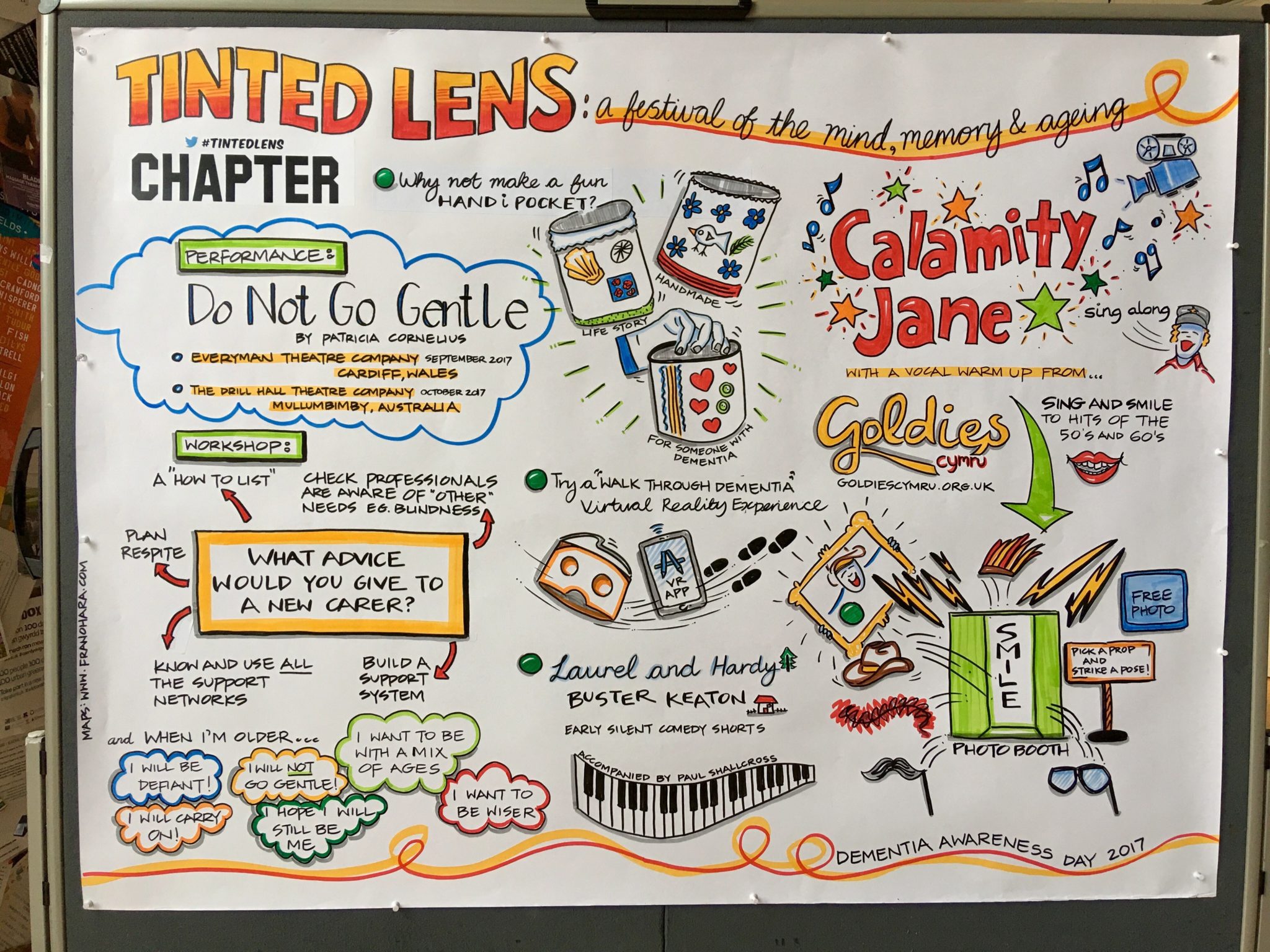
People affected by dementia often have to give up the things they love due to inaccessible and unsupportive environments. This includes visiting a cinema.

Cinemas have an important part to play in tackling the social and economic impact of dementia, by allowing people living with dementia to continue to participate in entertainment. Our new cinema guide, produced in collaboration with Alzheimer’s Society and UK Cinema Association, is designed to help cinemas improve their accessibility and become more dementia-friendly.

People living with dementia should be able to live the life they want to lead in their communities, irrespective of their condition. This will only be achieved with greater awareness, understanding, and support for those impacted by dementia. Becoming a dementia-friendly organisation means providing the opportunities to help every person with dementia continue to do the things they want to do and cinemas are central to this aim.

From your first family trip to the big screen to seeing the latest blockbusters with friends as a teenager, film is an immersive experience which can leave a profound and lasting impact on an individual. It can promote activity and stimulation of the mind; be an important tool for reminiscence, and is often associated with relaxation, engagement and, above all, enjoyment. By developing an understanding of dementia, cinemas can make a huge difference to people living with dementia.

This guide gives best practice advice on how to run dementia-friendly screenings and shares successful case studies from organisations already running. It aims to spread awareness of dementia-friendly screenings and encourages cinemas of all sizes to get involved.

We have also prepared a dementia friendly survey to assist with gathering data at your screenings.

Access the guide, along with further resources in the downloads section.